
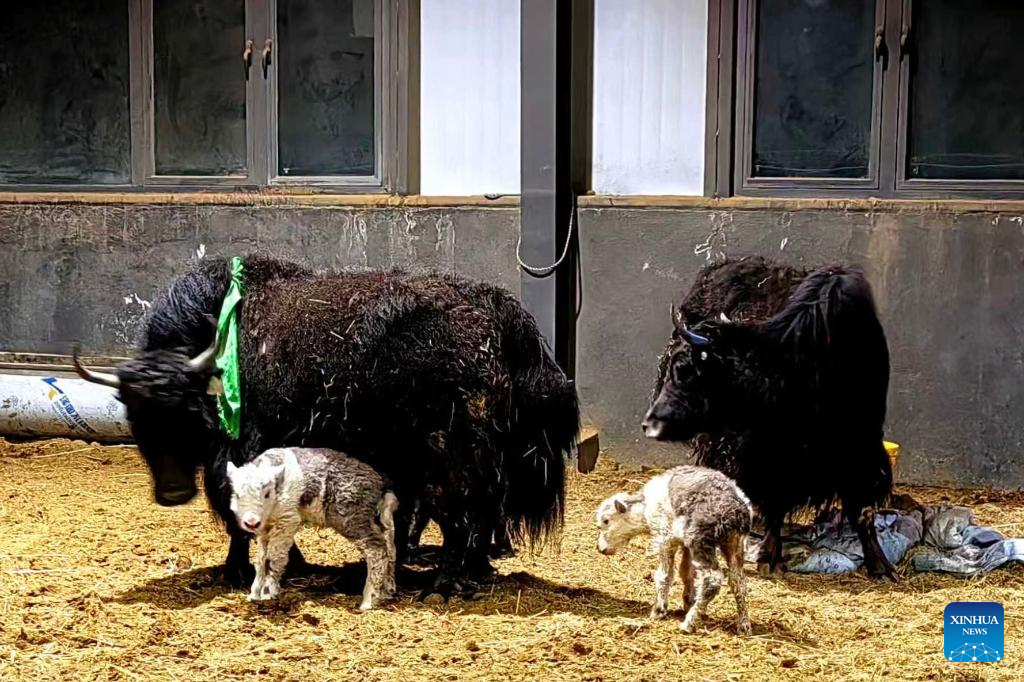
This photo taken on March 30, 2026 shows two white cloned yaks in Damxung County, southwest China's Xizang Autonomous Region. Chinese scientists announced Monday that they have achieved a breakthrough in yak cloning, with 10 cloned calves all naturally delivered in southwest China's Xizang Autonomous Region.(Xinhua)
LHASA, April 27 (Xinhua) -- Chinese scientists announced Monday that they have achieved a breakthrough in yak cloning, with 10 cloned calves all naturally delivered in southwest China's Xizang Autonomous Region.
These calves, consisting of three black yaks and seven white ones, were born from March 25 to April 5 at a yak breeding and research base in Xizang's Damxung County, all meeting expected standards and steadily gaining weight.
"This shows the technology has moved from a one-time success to a stable, mass-scale application," Fang Shengguo, who led the research team from Zhejiang University, said at a press conference in the county.
The mass births came after the first cloned yak was born in July 2025, which has grown healthily and weighs about 183 kg now.
Yaks are endemic to the Qinghai-Tibet Plateau, serving as both a key livelihood asset for local herding communities and an integral component of the plateau's ecosystem. Unlike ordinary cattle cloning, yaks have developed unique cellular mechanisms to adapt to the plateau's low oxygen and strong ultraviolet radiation.
The joint project by researchers from the regional plateau institute of biology, the Damxung County government and Zhejiang University used whole-genome selection and somatic cell cloning technologies to produce the cloned yaks.
High-altitude agriculture and animal husbandry is one of the key industries Xizang is pursuing during the 15th Five-Year Plan (2026-2030) period.
The new cloning technology addresses long-standing challenges such as slow genetic breeding cycles and declining yak quality, serving as a strategic tool that integrates scientific innovation, local livelihoods, economic growth, and ecological protection while driving the region's transformation toward modern, high-quality plateau agriculture, Fang said. ■
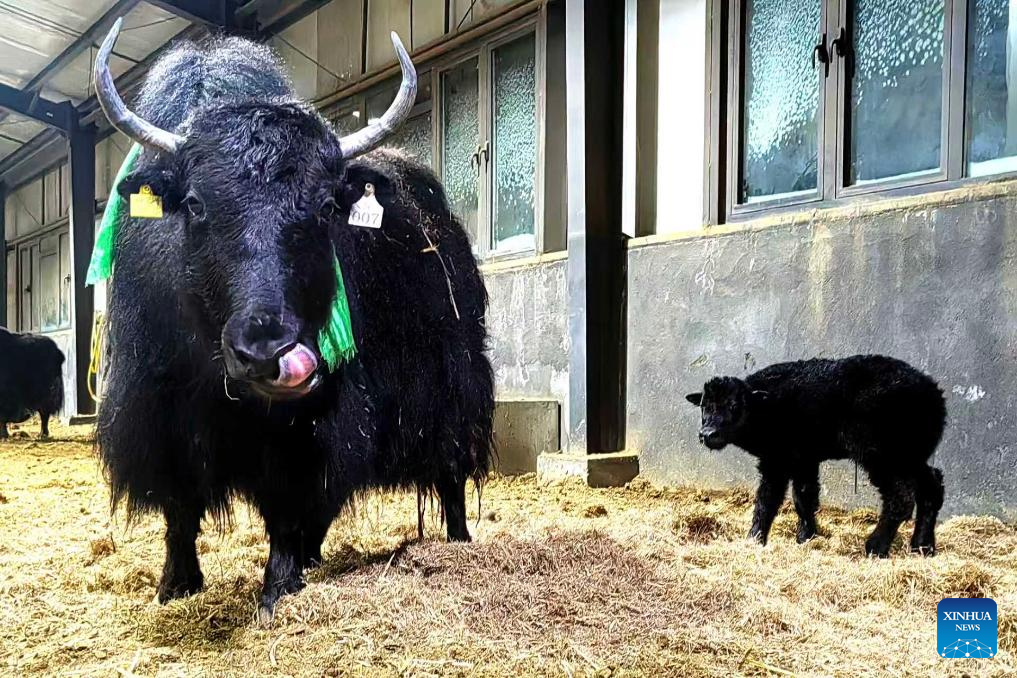
This photo taken on March 30, 2026 shows a black cloned yak (R) in Damxung County, southwest China's Xizang Autonomous Region. Chinese scientists announced Monday that they have achieved a breakthrough in yak cloning, with 10 cloned calves all naturally delivered in southwest China's Xizang Autonomous Region.(Xinhua)
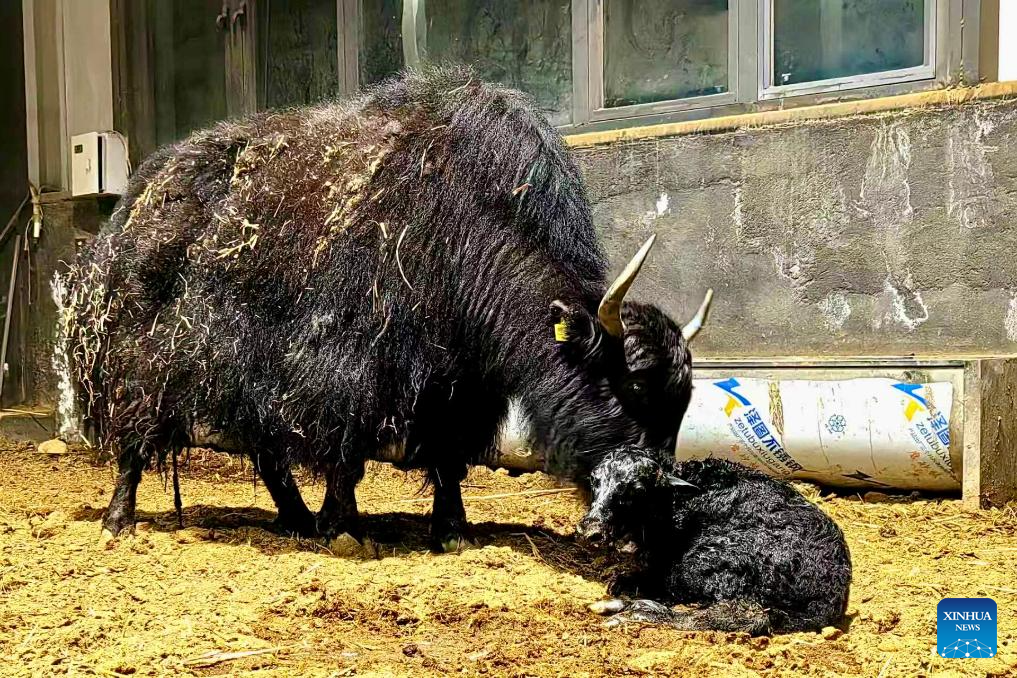
This photo taken on March 30, 2026 shows a black cloned yak (R) in Damxung County, southwest China's Xizang Autonomous Region. Chinese scientists announced Monday that they have achieved a breakthrough in yak cloning, with 10 cloned calves all naturally delivered in southwest China's Xizang Autonomous Region.(Xinhua)


